Dr. Jeffrey Oles, DC
Gentle, lower-force chiropractic
Comfortable, lower-force adjustments for people who are nervous about chiropractic — with exercise to improve balance, strength and flexibility, and nutrition advice alongside.
- Palmer College of Chiropractic · practicing since 1991
- Office workers, seniors and manual trades
- Accepting new patients · In-network with most major insurance plans, including Medicare
Already a patient? Schedule with Dr. Oles


It started with my mother’s pain
When I was in high school in Detroit, my mother had severe neck, shoulder and arm pain. It came from her very active lifestyle and her work as a dental hygienist.
She sought medical help first and was prescribed a variety of pills, which did nothing for her pain. Desperate, she started seeing a chiropractor. That care not only relieved the pain, it let her go back to everything she had been doing with no limitations.
At that moment, I knew I wanted to be a chiropractor. I have seen the same thing happen first-hand many times since.
I graduated from Palmer College of Chiropractic in 1991 and have practised in the Milwaukee area ever since — Zastrow Chiropractic through the nineties, then Nowak and Lewis, then Nowak Chiropractic until 2020. Glendale is where I see most of my patients now, and most of what comes through the door is chronic neck and back pain.
I’m always referred to as the gentle one
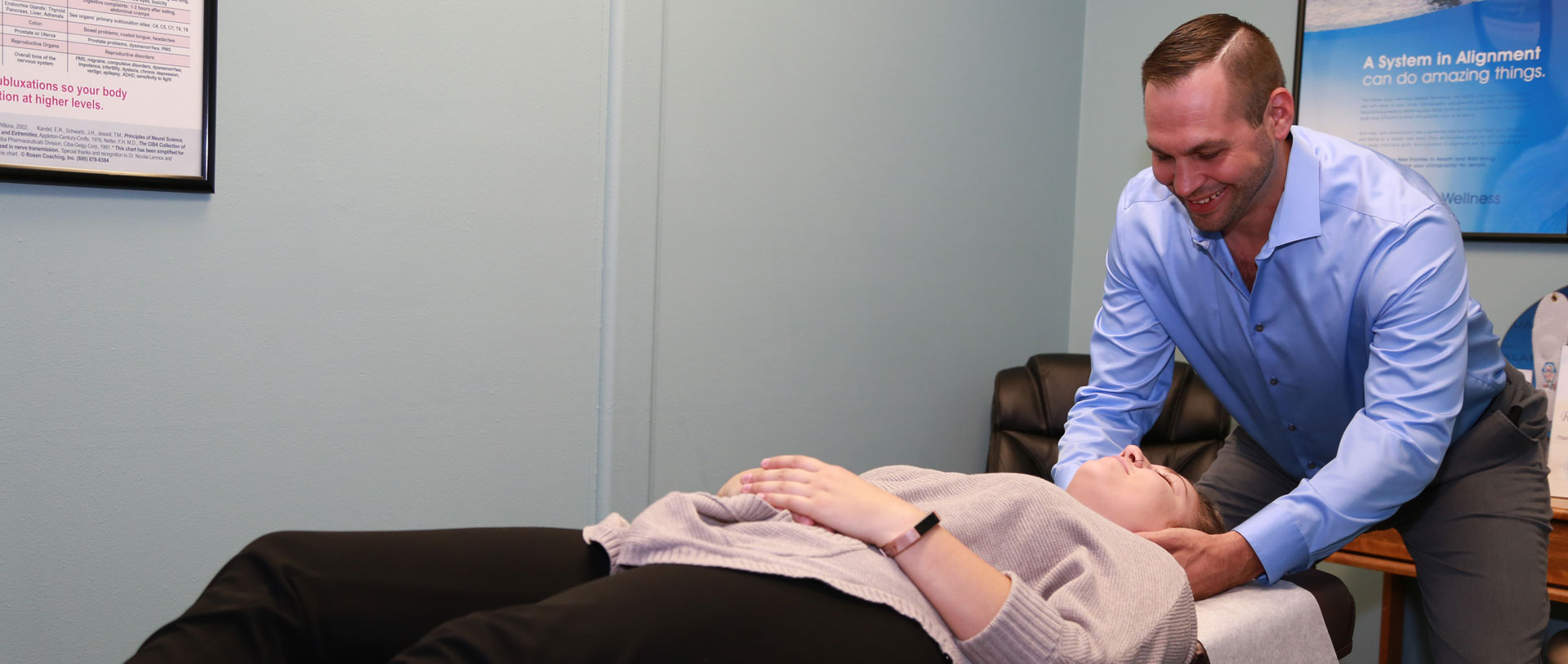
I use gentle drop-table techniques, instrument adjusting and soft-tissue work alongside manual hand adjustments, for anyone who wants a lower-force style of treatment when more vigorous techniques are not wanted.
What an adjustment feels like
An adjustment uses the hands to apply gentle pressure to a joint that is stuck, inflamed and painful — restoring proper motion and alignment, which takes away the pain and the stiffness.
Outside the office
I play cards and golf with friends, and I work in the yard and garden. As a single dad, I love spending time with my daughter — exploring the outdoors, or making a nice meal together and watching one of our favourite films.
Where I focus
Every doctor at Chiropractic Company is trained to care for the full range of spinal and musculoskeletal conditions. What differs between us is the additional training we’ve done and the patients we’ve spent the most time with.
Postural strain from too much sitting
Office workers carrying chronic neck, upper back and lower back pain and stiffness — the result of too many hours in a chair. It usually builds for a long time before anyone does anything about it, and it responds well once we address the pattern rather than just the sore spot.
Balance, core strength and everyday movement
Elderly patients with balance issues and weak core muscles, who find it hard to get up from the floor, in and out of bed, and in and out of the car. These are the movements that decide whether someone keeps their independence, so that is what we work on.
Bending, lifting and awkward positions
Awkward bending, lifting and working positions commonly affect the lower back and bring on sciatic and leg issues. Manual trades cannot simply stop doing the thing that caused it, so the plan has to work around the job.
Conditions I treat
Like every doctor at our Glendale office, I care for the full range of conditions below.
How I work
I use manual hand adjustments, but I also keep gentler options on hand for anyone who would rather avoid a more vigorous technique. Which one you get depends on what you are comfortable with.
Diversified
The most common form of adjusting patients, and my favourite technique. Specific, hands-on, and what most people picture when they think of getting adjusted.
Activator / instrument
For those who prefer a light, gentle and specific adjustment. A small handheld instrument delivers a controlled impulse — no twisting, no popping sound.
Extremity adjusting
Most people have joints outside the spine that need help as well — shoulders, elbows, wrists, hips, knees, ankles and feet.
Thompson drop-table
The table section drops a short distance as the adjustment is delivered, so less manual force is needed. One of the gentler ways to get the same result.
Motion palpation & x-ray
Feeling how each joint moves through its range rather than at rest, with on-site imaging when it will change the plan.
Active Release, myofascial & trigger point
Hands-on work for muscle tension, adhesion and the tight bands that keep pulling a joint back out of position.
Corrective exercise & PNF stretching
Specific exercises for the pattern found on your exam, plus contract-then-relax stretching that reaches range a passive stretch will not.
Nutrition counseling
Practical guidance on eating patterns that affect inflammation, recovery and energy. Certified through the Wisconsin Chiropractic Association.
Also uses digital foot scan, electrical stimulation, custom orthotics and home exercise programming.
You decide what I do
If a patient says "don’t touch my neck", I won’t — but I’ll give alternative ways of treating that area as an option. There is almost always another route to the same result.
When I’ll send you somewhere else
Acute bowel or bladder dysfunction means immediate follow-up at the ER. Extremity pain with swelling, redness and heat goes straight to the ER too, to rule out a blood clot or acute infection. And although chiropractic does well with TMJ, if it hasn’t responded after a few adjustments I’ll refer you to a TMJ specialist — often a custom mouth guard is what’s needed.
Education & training
Also at our Glendale clinic
3 providers work at Glendale. If another is a better fit for what you need, or has a day that suits you better, our team will help you find the right one.
Start with Dr. Oles for $29
A consultation and exam with Dr. Oles, and X-rays if needed. At visit two, your results and a care plan built for you. With or without insurance. *See offer terms
More life in every day.